Learning To Surf In
Cornwall
More people learn to surf in Cornwall than anywhere else in Britain, and for good reason. The Atlantic does the hard work, the north coast is lined with beaches that suit beginners, and there’s a surf school on most of them.
That doesn’t make it easy to choose. Most people book a first lesson knowing very little about what actually happens in one, when’s best to come, or what separates a good school from one that’ll put sixteen of you in the water with a single coach.
So this is what we’d tell a friend who rang up and asked. We teach at Perranporth, so we’re hardly neutral, but most of what follows applies wherever you learn to surf in Cornwall. If it helps you book somewhere else, that’s fine by us.

What A First Lesson Is Really Like
Most people who book a first surf lesson are quietly worried about one of three things. That they'll be the worst one there. That they're too old, or too unfit, or too nervous. Or that they'll spend two hours being cold and swallowing seawater and never stand up at all.
Fair enough. So here's what actually happens, from people who teach it most days of the year.
You'll be in a group with other beginners, and almost all of them will be just as unsure as you are. Nobody who has done this for a living is judging you, because every single person who surfs was once exactly where you're standing.
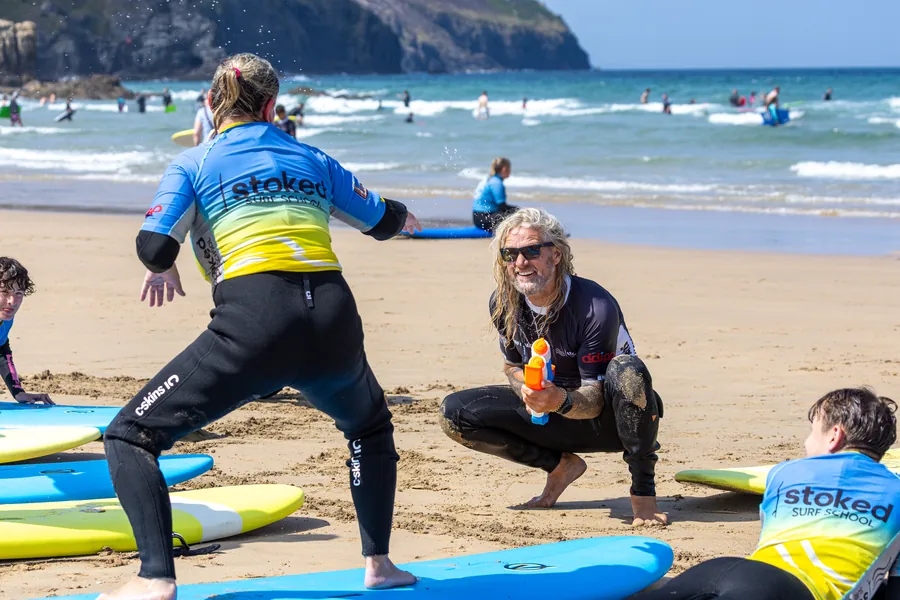
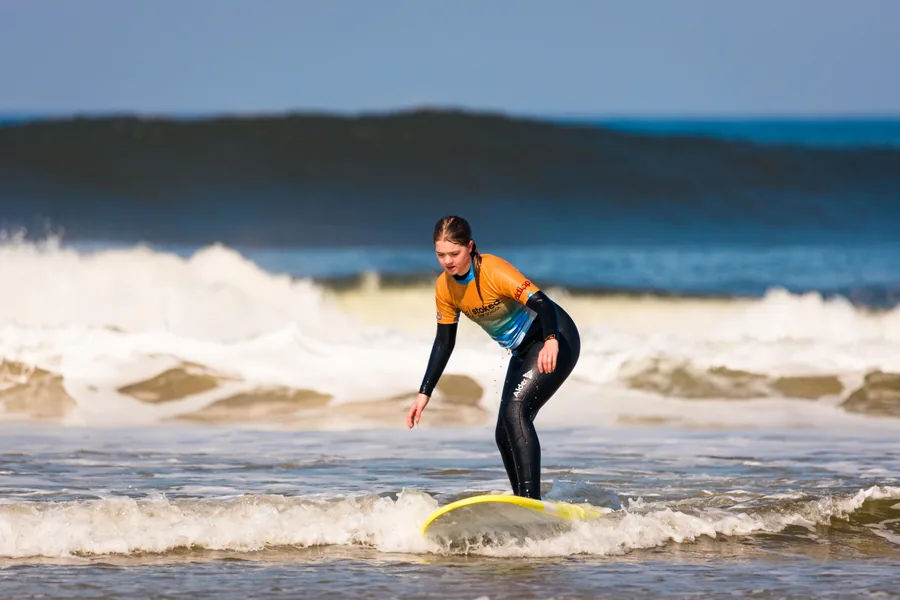
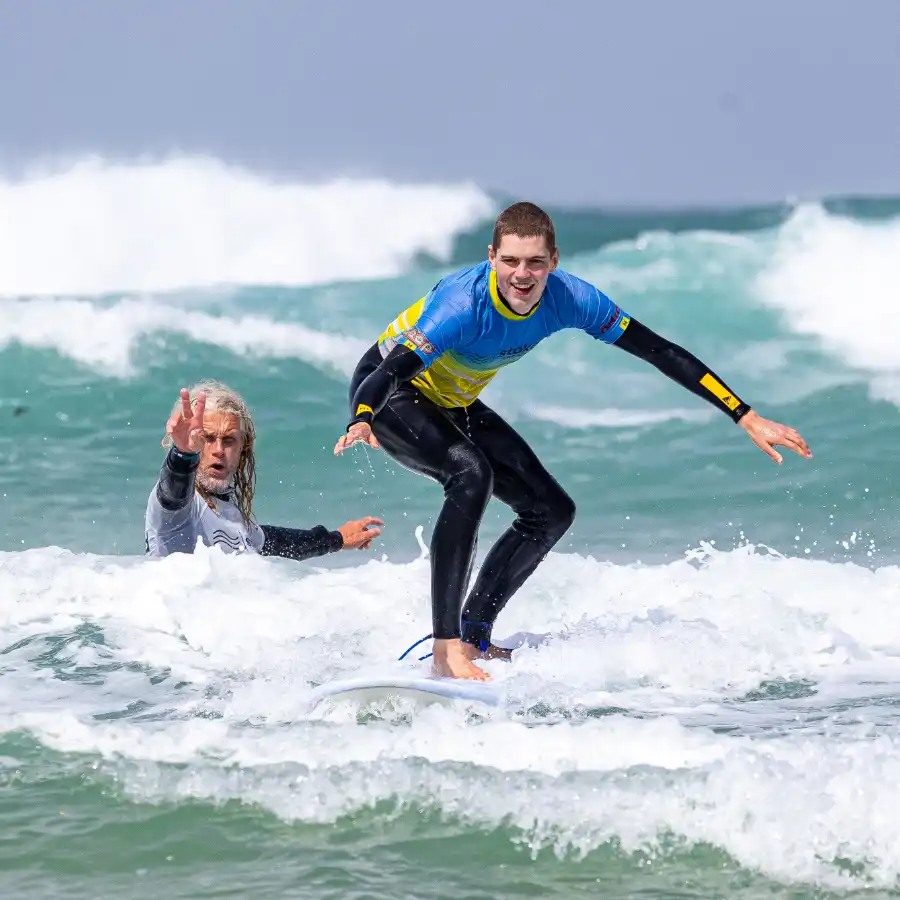
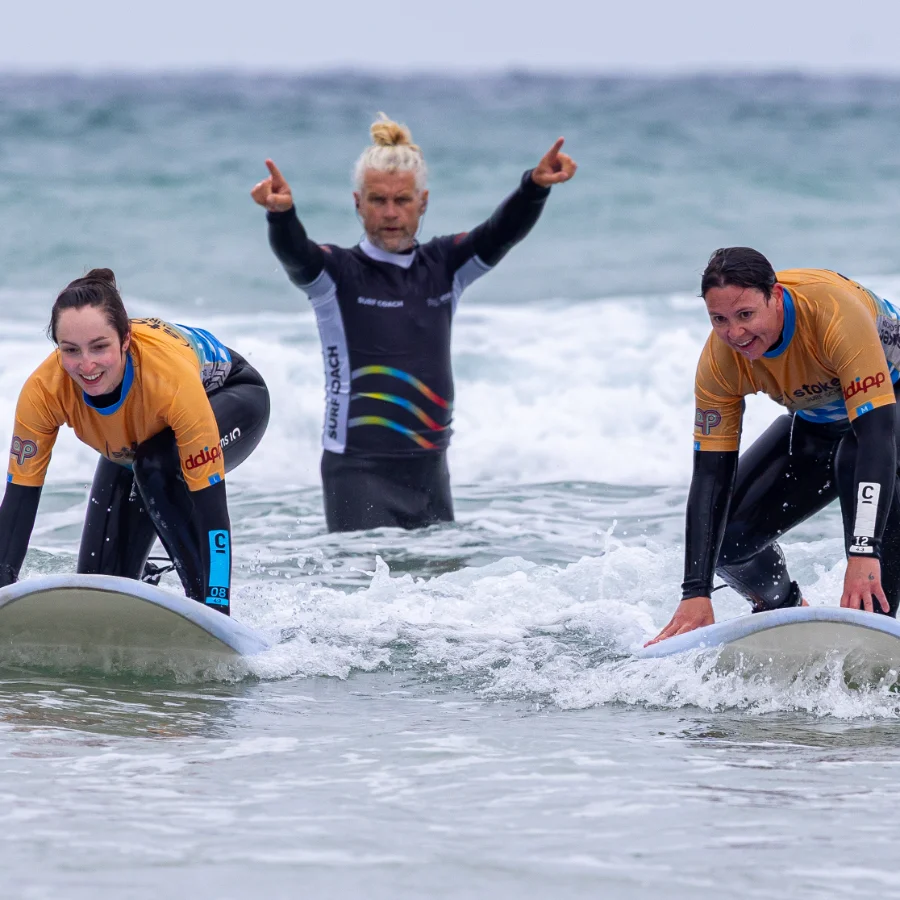
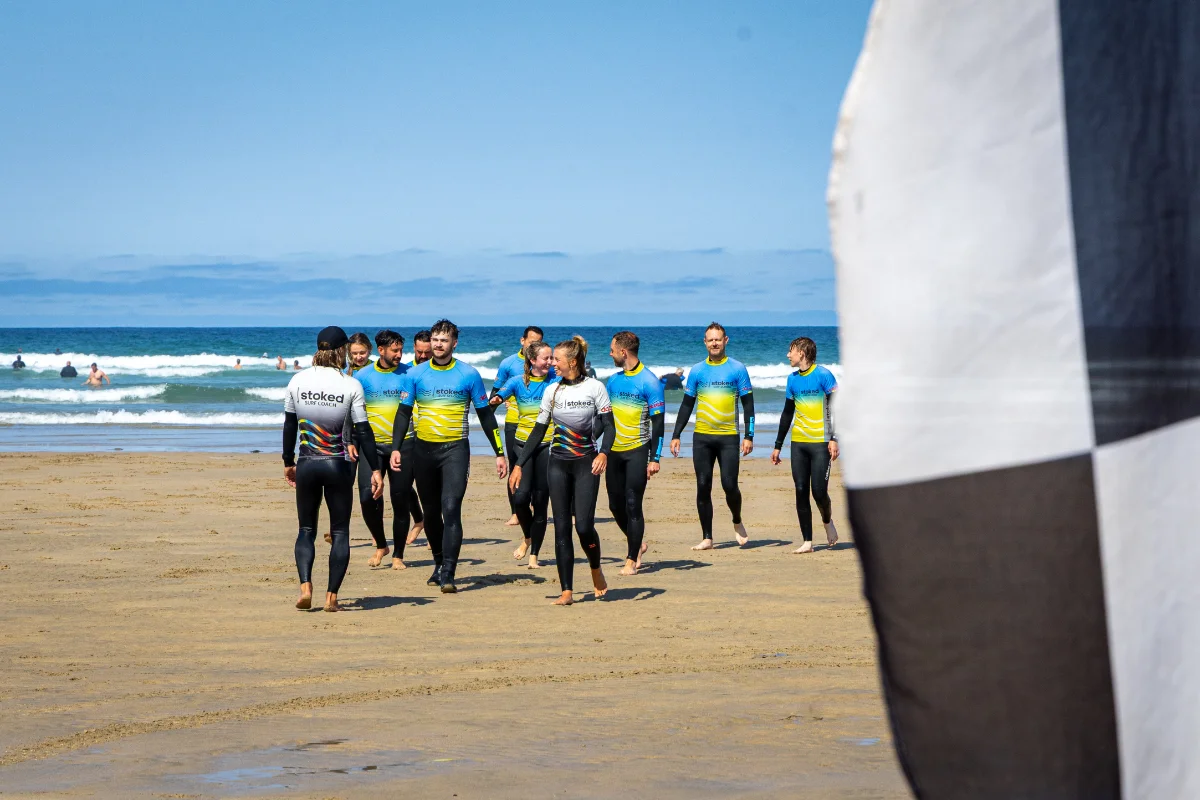
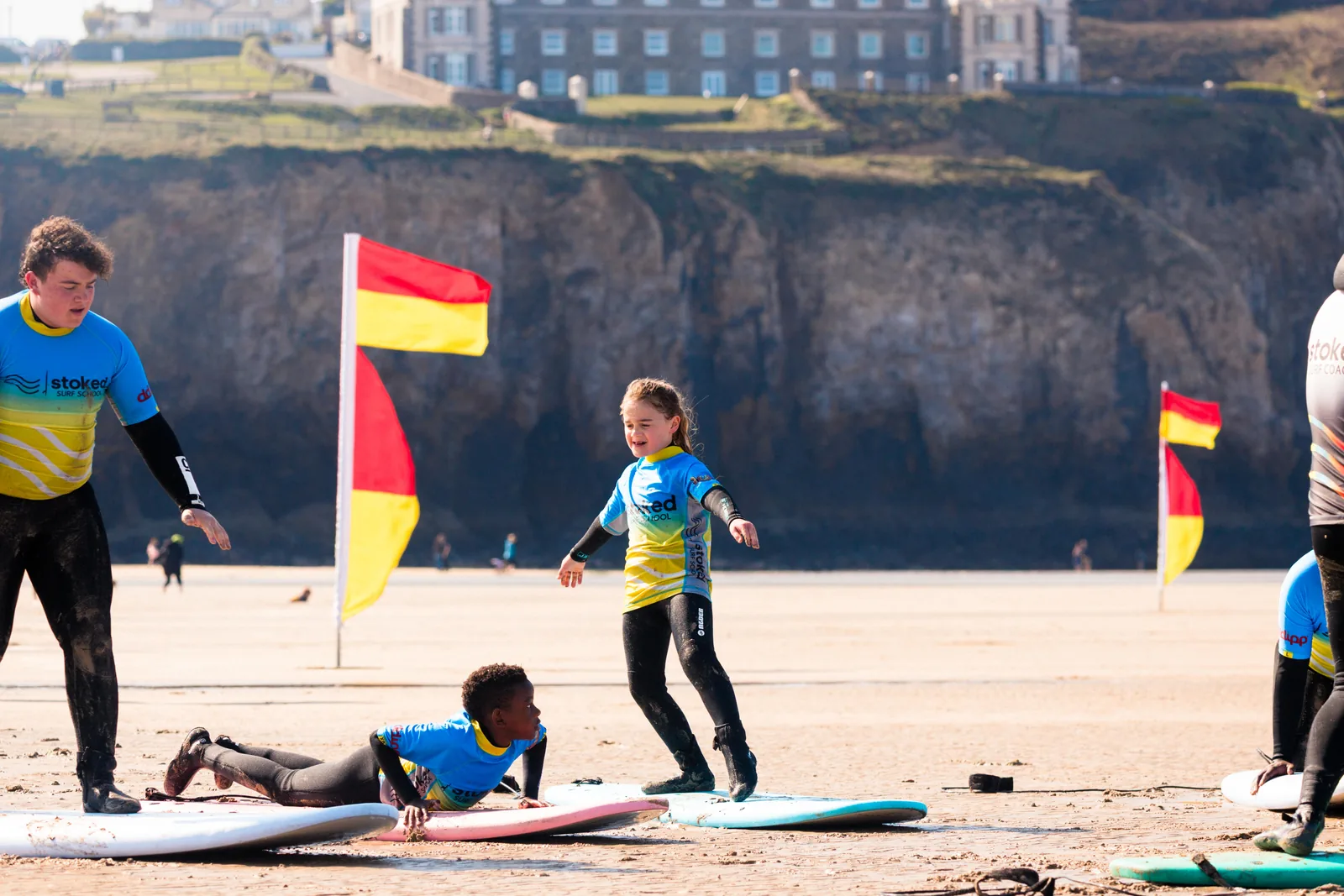
A standard lesson at Stoked runs two hours. The first twenty minutes or so happen on the sand: how the board works, how to lie on it, how to get to your feet, and the safety side. Then you're in the water, in white water rather than proper waves, which is where everyone learns.
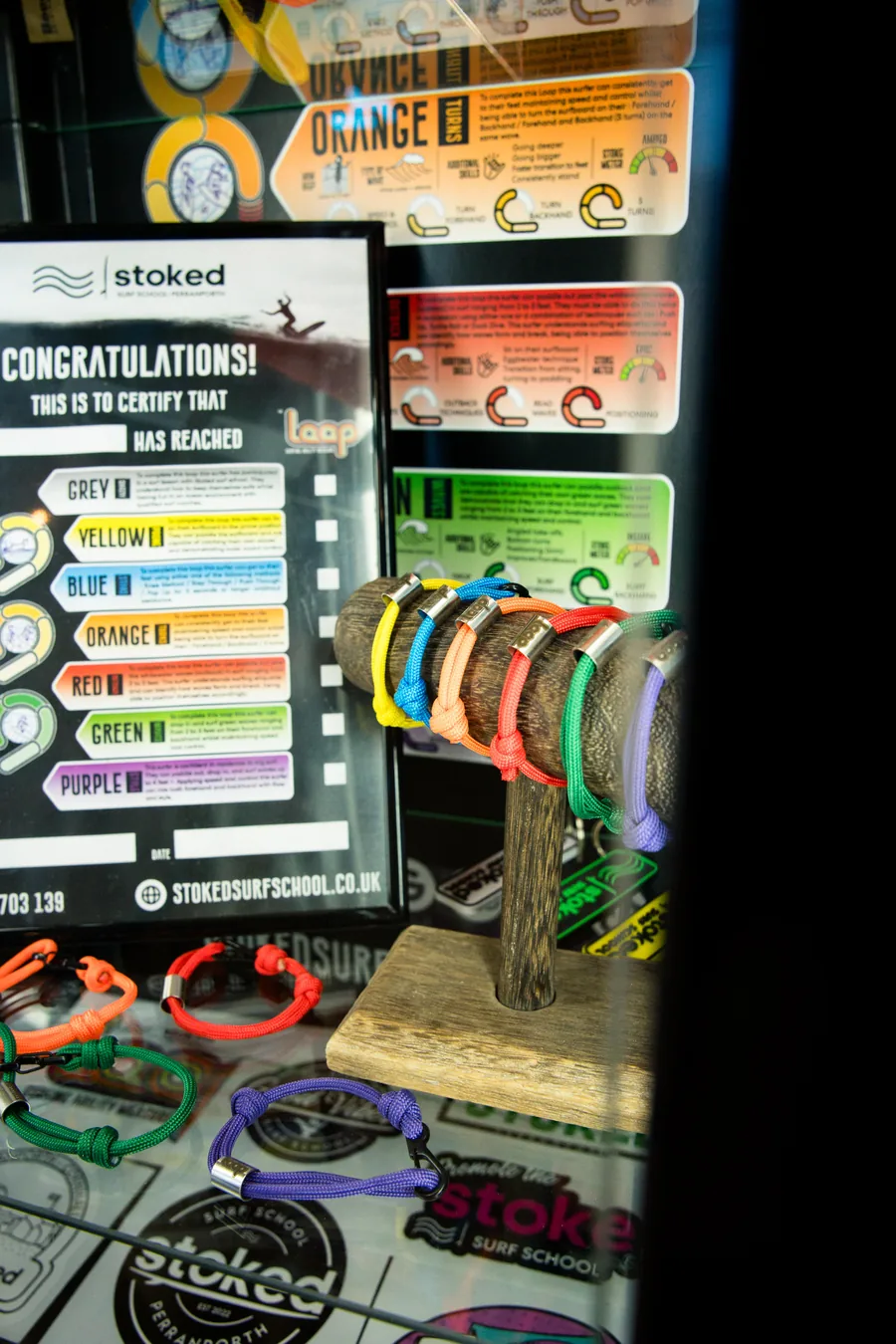
Most people stand up in their first session. Not on every wave, and usually not elegantly, but they stand up. If you don't, you're still not unusual, and a decent coach will tell you exactly what to change next time rather than leaving you guessing. We put everyone on our Surfing Ability Measure at the end of a session for that reason, so you leave knowing where you actually are.
Will you actually be able to do it?
Three questions come up more than any others, so here they are answered properly.
"Am I fit enough?" Almost certainly. Surfing looks athletic because you see photos of people who have done it for twenty years. A beginner lesson is mostly standing in waist-deep water, catching white water that's already broken, and getting to your feet on a big soft board that does most of the work. You'll be tired afterwards in the way a long walk makes you tired. If you can get yourself up off the floor without help, you can do a beginner lesson.
"Do I need to be a strong swimmer?" You need to be comfortable in water that's roughly chest deep, and that's genuinely it for a beginner group lesson. You're not paddling out past the break. You're in the white water with a coach a few feet away and a board that floats far better than you do. If you're a nervous swimmer, say so when you book. It changes nothing about whether you can come and quite a lot about where the coach stands.
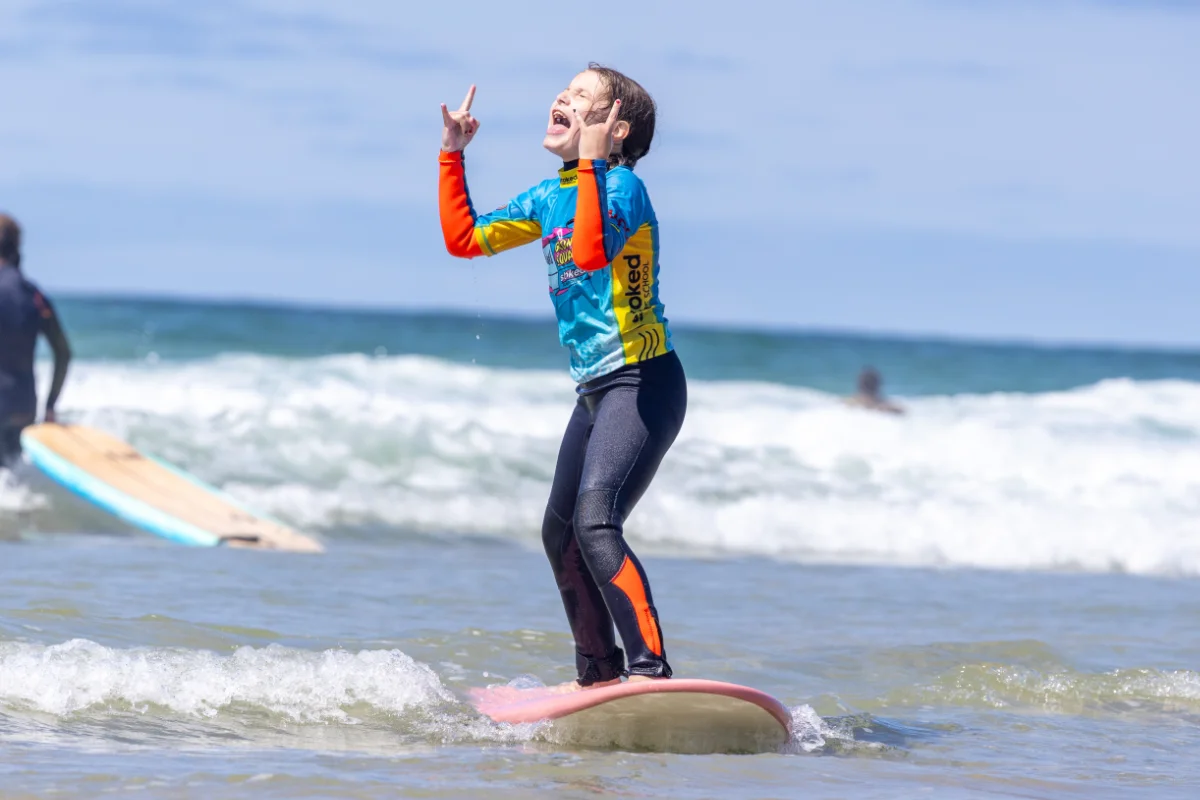
"Am I too old?" We've taught people in their seventies. Children pick it up faster, mostly because they're not analysing it, but adults tend to listen better and improve more steadily once they start. Nobody has ever been sent home for being the oldest in the group.
The one thing that genuinely matters more than any of this is turning up willing to fall off a lot in the first hour. Everyone does. It's the lesson.
When to come
Summer is the obvious answer and it isn't the best one.
July and August have the warmest water and the busiest beaches. If you're coming in peak season, book ahead, and take a morning slot if you can. Mornings are usually cleaner, quieter and better organised than mid-afternoon.
May, June and September often give you better waves, more space and sea temperatures that are perfectly fine in a wetsuit. September in particular is an open secret: the sea has had all summer to warm up, the schools are quieter, and the waves tend to be more consistent than they were in August.
Autumn surprises people most. The sea holds its summer warmth well into November, and a decent wetsuit handles the rest. Our own season runs to the end of November, and those last few weeks are some of the quietest and best learning conditions of the year. October half term is quietly one of the best weeks on the calendar for a first lesson. A few Cornwall schools keep going through the winter proper, so it's worth ringing round if you've got your heart set on a January lesson.
The one thing nobody can promise is the surf itself. Cornwall gets its waves from Atlantic swell, and some weeks are flat. Any school worth booking with will move you rather than put you in conditions that won't teach you anything, so build a little flexibility into your plans if you can.
What To Bring
Less than you'd think. Any reputable school includes the board and the wetsuit, so you need:
- Swimwear to go under the wetsuit
- A towel
- Something warm for afterwards, because you'll be colder out of the water than in it
- Sun cream, even in October. Glare off the water catches everyone out
- A bottle of water. Surfing is thirstier work than it looks
What to leave behind. Don't bring jewellery you'd be upset to lose, and take rings off before you get in. Don't bring a phone down to the water's edge. And you don't need your own board. Buying one before you know whether you like it is the most common beginner mistake going, and the boards you learn on are deliberately bigger and softer than anything you'd buy.
A word on wetsuits. A wetsuit works by holding a thin layer of water against your skin, which your body then warms. So it's supposed to be tight, and it's supposed to let a bit of water in. If it feels like a snug pair of jeans you're wearing it right. If you can fit a fist down the back of the neck, ask for a smaller one.
Where to learn to surf in Cornwall
The north coast picks up the Atlantic swell, so that's where most surf schools are: Perranporth, Newquay, Bude, Polzeath, Sennen, Praa Sands and plenty more. The south coast gets far less swell, which makes it lovely for swimming and quiet for surfing.
What matters more than the name of the beach is what's actually on it. For a first lesson you want three things:
A lifeguarded area. Between roughly May and September the RNLI patrol the main Cornish beaches and mark a swimming and bodyboarding zone with red and yellow flags. Surf schools work alongside them, which is exactly what you want when you're new.
Gentle white water you can stand up in. Beginners learn in waves that have already broken, in water around waist to chest deep. A beach that shelves gently gives you much more of that than one that drops away sharply.
Easy access from the car park. This sounds trivial until you've carried a nine-foot board half a mile in a wetsuit.
Most of the well-known north coast beaches tick all three. We teach at Perranporth, where three miles of beach means there's room even in August, but there are good schools up and down that coast and the right one for you may well be the nearest one.
How to Pick A Surf School
- Check they're Surfing England accredited. Covers coaching standards, insurance and safety
- Ask whether coaches hold a lifeguard qualification. Teaching in moving water is a different job
- Look at group sizes. Six beginners per coach gets attention. Sixteen does not
- Read the reviews properly. Look past the stars at what people describe
- Ask what happens if the surf is flat. A good school moves you rather than taking your money
If you're bringing children
Most schools take children from around seven in a group lesson, with private coaching for younger ones. Kids tend to learn faster than adults, mainly because they aren't overthinking it.
A quick word to parents: you'll enjoy it more if you get in too. Standing on the beach in a coat watching is a colder two hours than being in the water with them, and children try harder when a parent is making just as big a fool of themselves nearby.
If you've got a child who's keen but anxious, a family or private lesson is usually money better spent than a group one. Fewer people, more coach attention, and nobody waiting on them.


Once you're hooked
If a lesson or two goes well, the next step is normally more sessions rather than a board of your own. Board and wetsuit hire is cheap, means you can surf whatever the conditions suit, and saves you finding out the expensive way that you bought the wrong board.
What progress actually looks like is worth knowing, because it isn't a straight line. Standing up comes first and often comes quickly. Reading the water takes far longer, and it's the part that separates people who can stand on a board from people who can surf. Most of that is simply time spent in the sea, watching what the waves do.
After that, it's just hours. Everyone who surfs is still learning, including the people teaching you.
If you've got questions before booking anything, give us a ring on 07988 703139. Happy to talk you through it whether or not you end up coming to us.
Fancy Giving It A Go?
We teach at Perranporth, three miles of beach on the north coast. Lessons from £45 with all the kit included, beginners welcome from age 7.